The Atelier
Where the
work happens
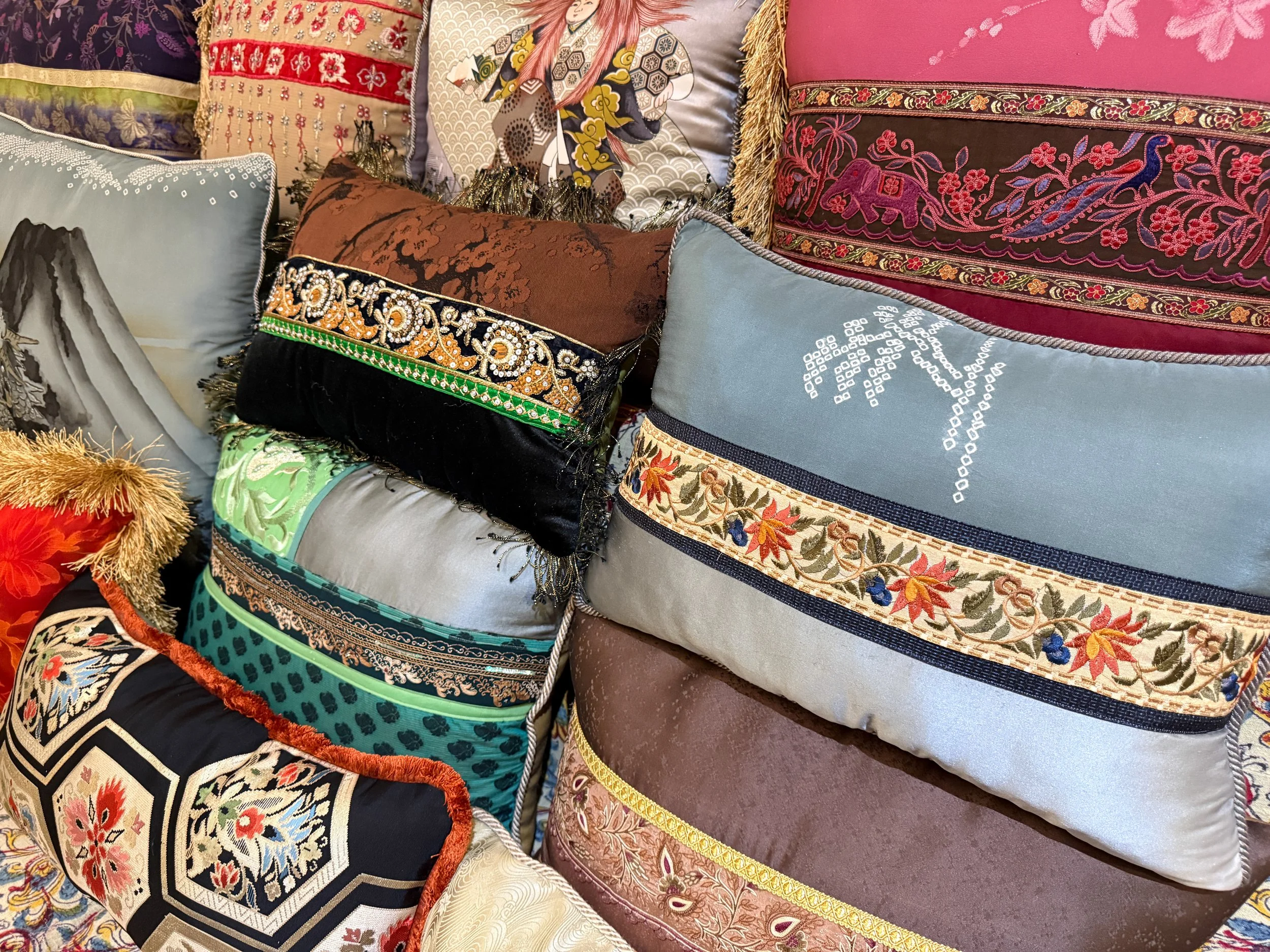
Every piece begins with a textile that has already lived. We find it, learn it, and make something new without erasing what it was.
Not restoration.
Not reproduction.
Transformation.
What We Do
In The Grotto is a one-person atelier. Every piece that leaves the studio has passed through one pair of hands; found, assessed, cut, sewn, and finished with the understanding that the textile being worked is irreplaceable.
The antique and vintage textiles we work with are not raw material in the conventional sense. They are objects with histories, sometimes documented, often only implied. A Benares silk sari carries the memory of the loom that made it, the ceremony it dressed, the hands that folded it. When we make a pillow from that silk, we are not erasing any of that. We are giving it a new audience.
"The goal is never to make something look old. It's to make something that respects what age has done."
This means working slowly. It means sometimes holding a textile for months before deciding how — or whether — to cut into it. It means that some pieces we acquire are never made into anything; they're too complete as they are, and they find their way to collectors as textiles, not pillows.
The pieces that do become pillows are designed around the textile, not the other way around. Size, construction, backing, closure, all of it serves what the fabric needs, not a predetermined template.
How a piece is made
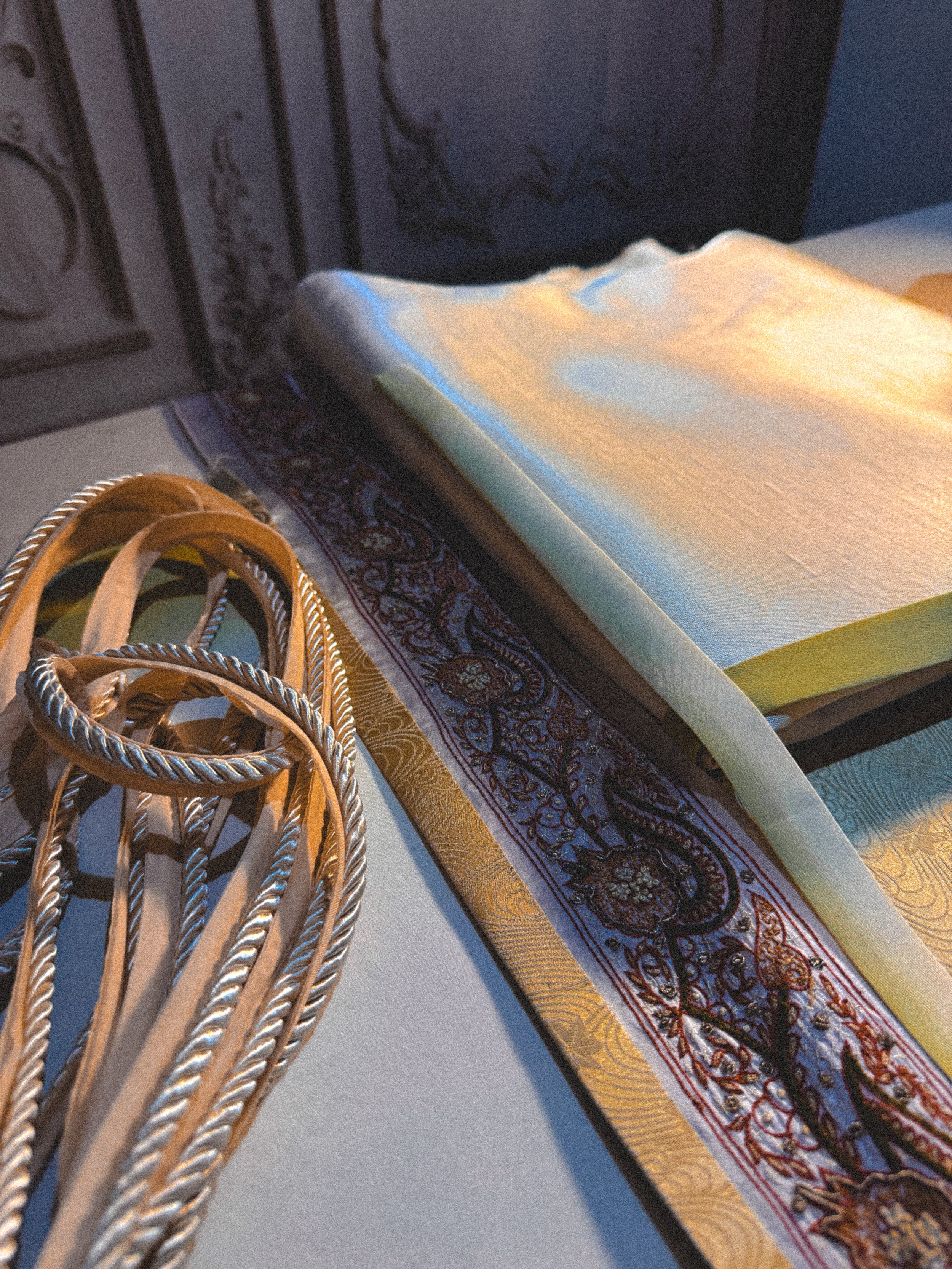
Sourcing happens in markets, estate sales, private collections, and occasionally through dealers who know what we're looking for. We travel when we can — Kyoto, Istanbul, Paris. We pass on far more than we acquire. The question is always: does this textile have enough left in it to deserve another life?
The find
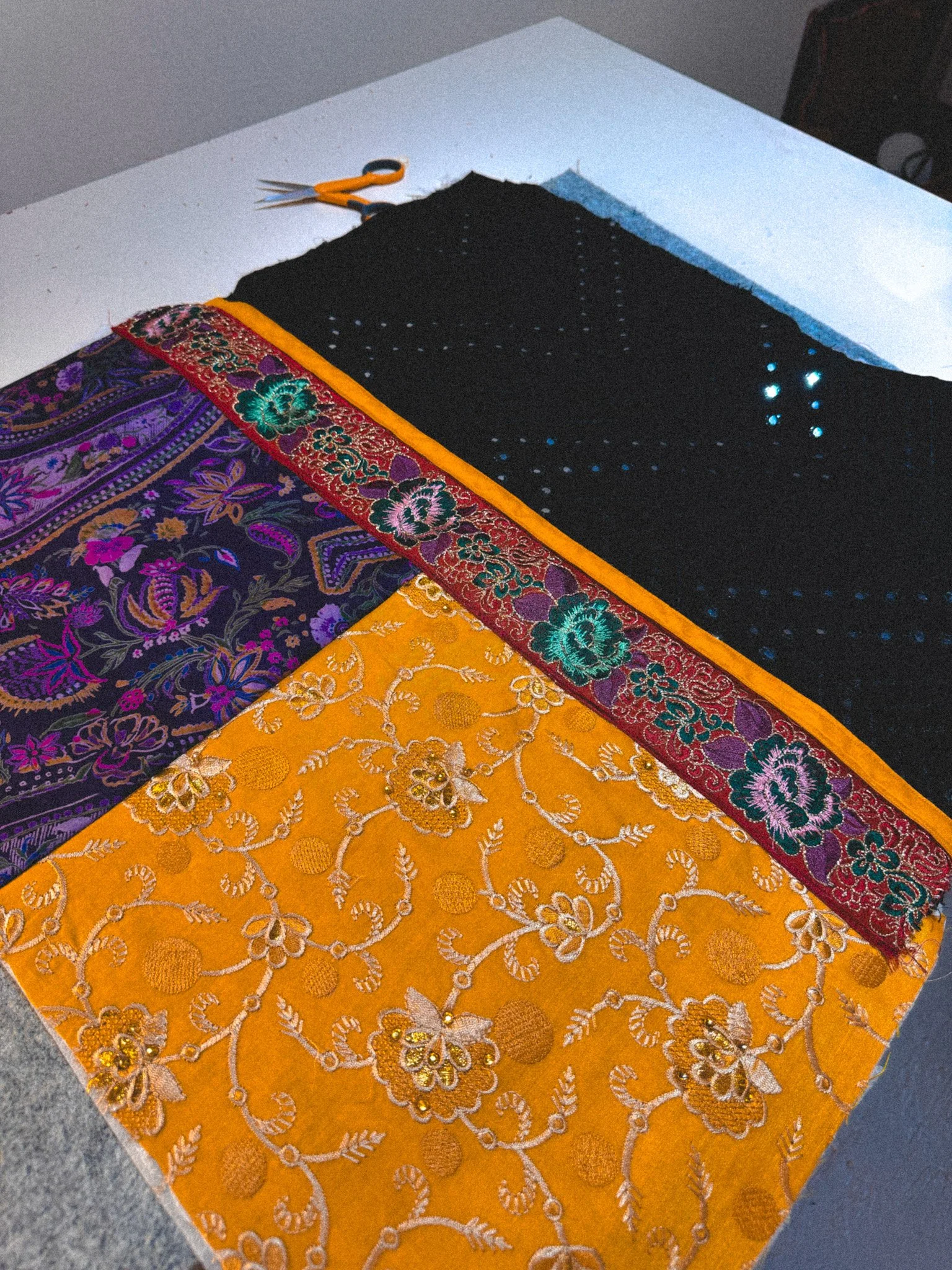
Every textile is assessed for condition before anything else happens. We look at fiber integrity, colorfastness, structural damage, and staining. Pieces that need cleaning are cleaned by hand — gently, in cold water, with pH-neutral soap.
Assessment & cleaning
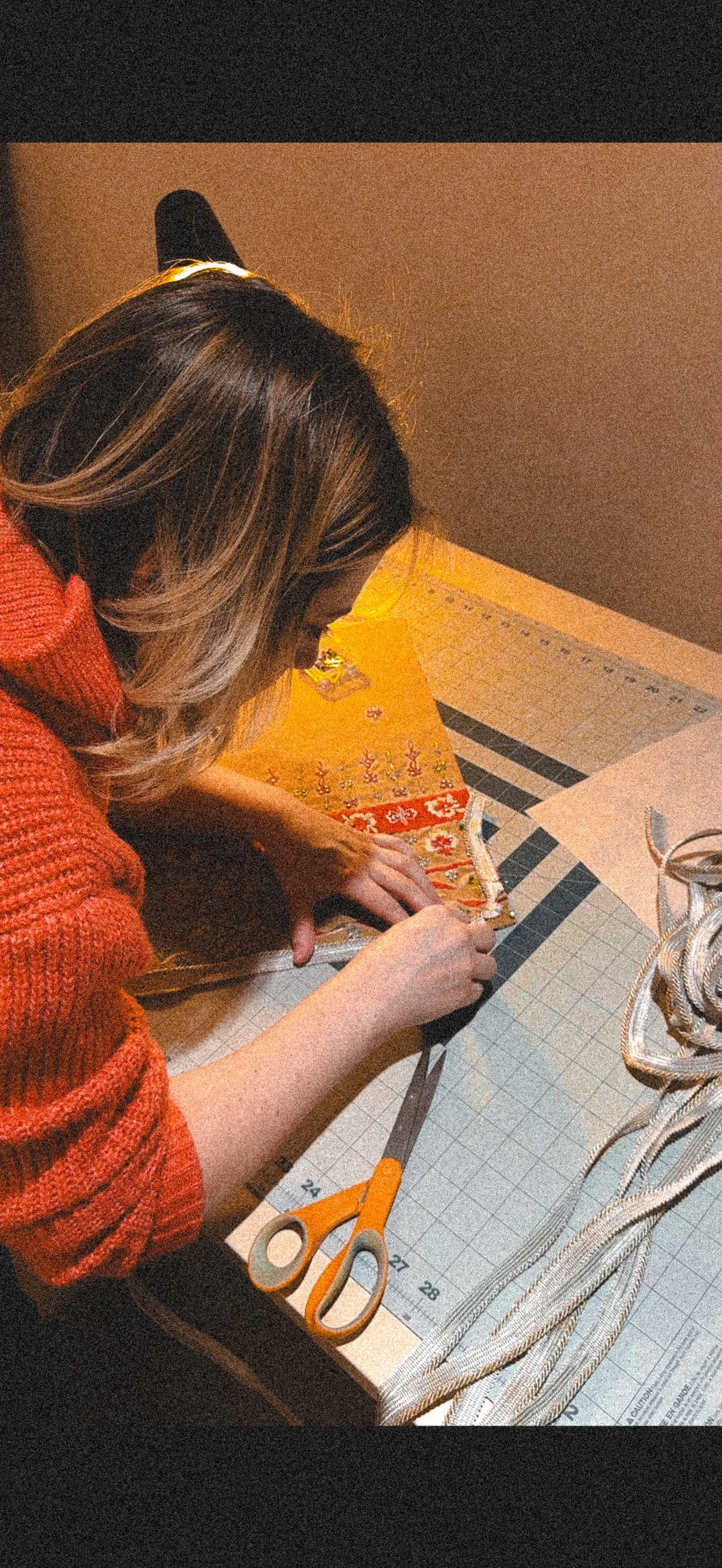
Cutting is the irreversible step, and we treat it as such. Before any scissors touch a textile, we spend time understanding the repeat, the motif, the grain, and what the fabric wants to be. A brocade with a central medallion becomes a centered, square pillow. An obi with a long horizontal pattern might become a narrow bolster or a table runner. The textile decides its own format.
Pattern & cut
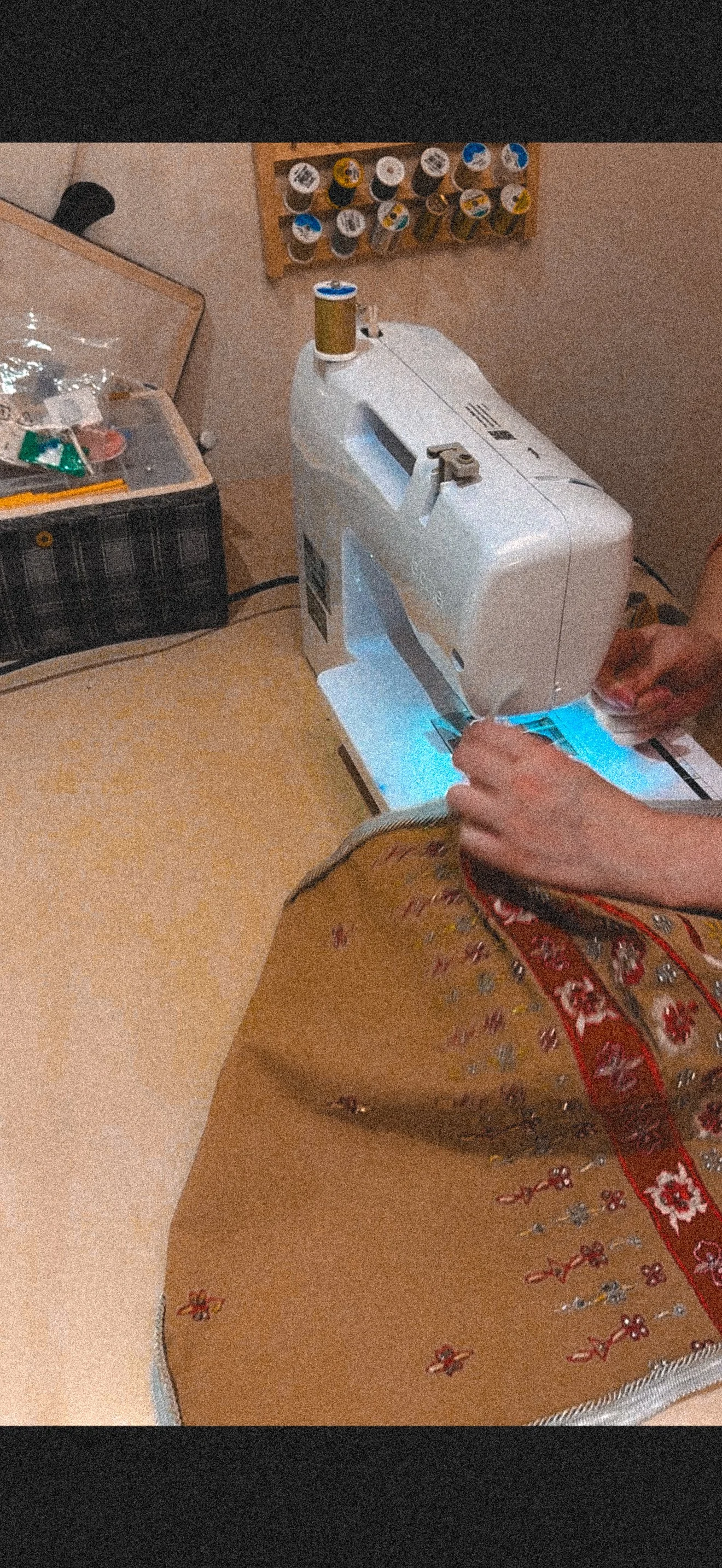
The front panel — the antique textile — is interfaced where needed to stabilize fragile areas without affecting the hand of the fabric. The reverse is a coordinating solid, chosen to complement rather than compete. Closures are concealed zips or sewn fully closed, set in by hand. Every seam is finished. Every corner is turned and pressed. We do not rush this part.
Construction & backing
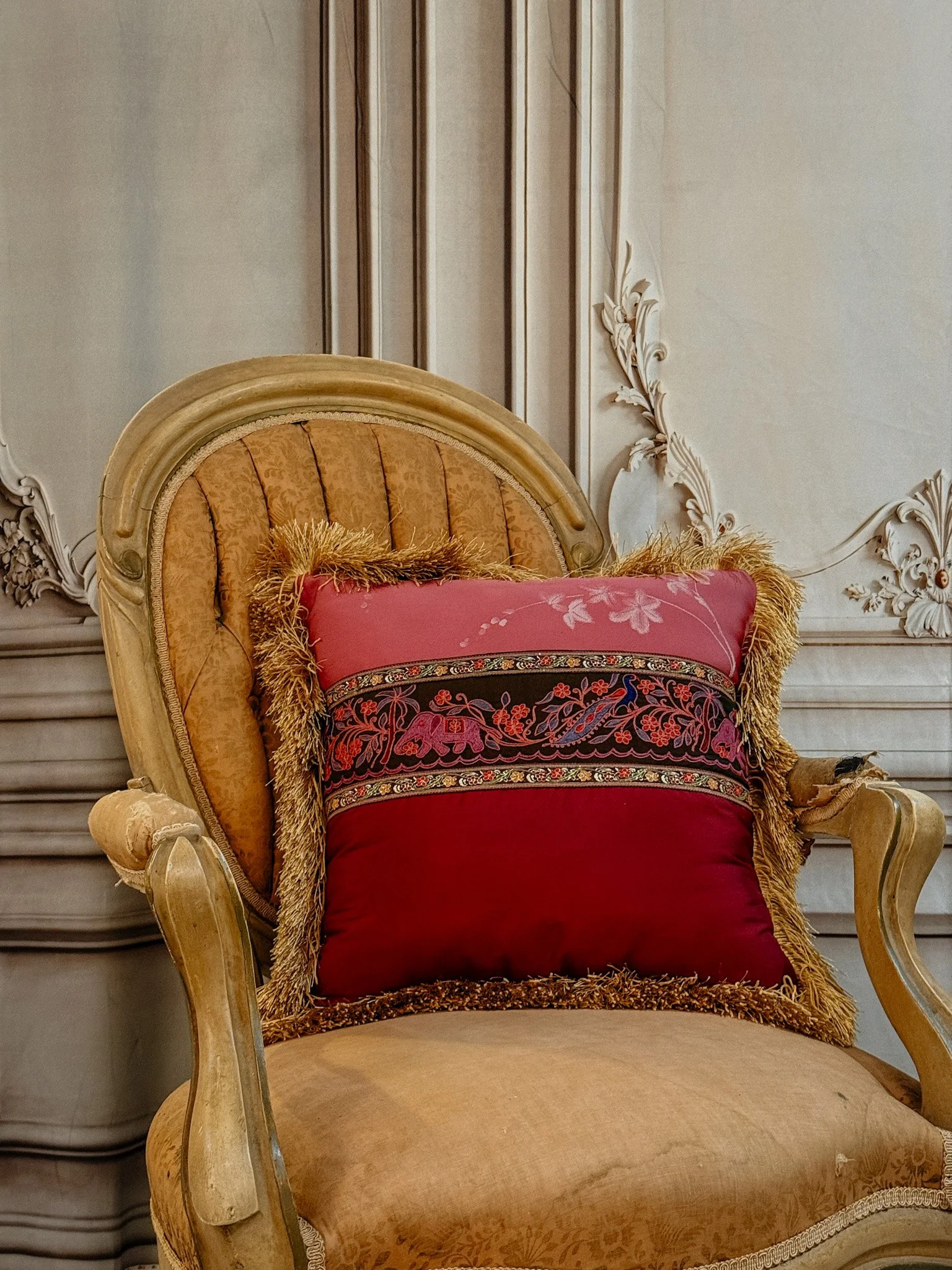
Before a piece leaves the studio, it's photographed in detail — full panel, macro of the textile, close-up of construction. A provenance note is written: what we know about the textile's origin, period, and likely use. This note ships with the piece. The object leaves the atelier only when the documentation is complete. We want the person who buys it to know what they're holding.
Documentation & release
The Textiles
What we work with,
and why
We are not generalists. The textiles that interest us share certain qualities: density of craft, age, and a making tradition that no longer exists in its original form. These are not vintage fabrics. They are objects from cultures with weaving and embroidery traditions measured in centuries.
Kyoto & Tokyo, Japan
Kimono & Obi
Japanese kimono silks range from the restrained to the extraordinarily ornate. Obi — the wide sash worn with kimono — is often the more remarkable textile: dense, structured, woven with metalwork that holds its form a century later. We focus on Meiji, Taisho, and early Showa period pieces.
Varanasi, India
Benares Brocade
Woven on traditional pit looms with real zari — gold and silver metallic thread wound around a silk core. The finest pieces have a weight and drape unlike any contemporary textile. We work primarily with late 19th and early 20th century examples.
Ottoman Empire & Central Asia
Ottoman & Central Asian
Embroidered textiles from the Ottoman period and Central Asian weaving traditions — suzani-adjacent embroideries, velvet fragments, metalwork panels — represent some of the rarest material we work with. These pieces require the most careful handling and command the most considered approach to construction.
Various origins
Rare & Singular
Occasionally we acquire pieces that don't fit any category — a European ecclesiastical textile, a Chinese rank badge, a fragment of Fortuny silk. These are handled case by case. If you're looking for something particular, write to us. We sometimes have material in the studio that hasn't yet become a piece.
Built to
outlast us
Care & Handling
Construction
All pieces are constructed by hand. Seams are finished with a French seam or bound edge. Corners are turned, not clipped. Zips are set by hand and concealed within the seam allowance.
Cleaning
Dry clean only, through a specialist who understands antique textiles. We are happy to recommend conservators who work with antique fabrics in most major US cities. Do not machine wash or steam.
Storage
If storing long-term, wrap in acid-free tissue and store flat in a cool, dry location. Never in plastic. Metalwork textiles — zari, obi — should not be folded tightly, as the metal threads can crack along fold lines.
Backing
We back every antique textile panel before cutting to stabilize it for handling and use. The backing is generally a lightweight cotton interfacing.
Display
Keep antique textiles out of direct sunlight — UV degrades silk and causes dye fading even in pieces that have survived a century. North-facing rooms, or placement away from windows, significantly extends the life of the textile.
Questions
We are happy to answer care and handling questions for any piece purchased from us, now or in the future. Write to info@inthegrotto.com.